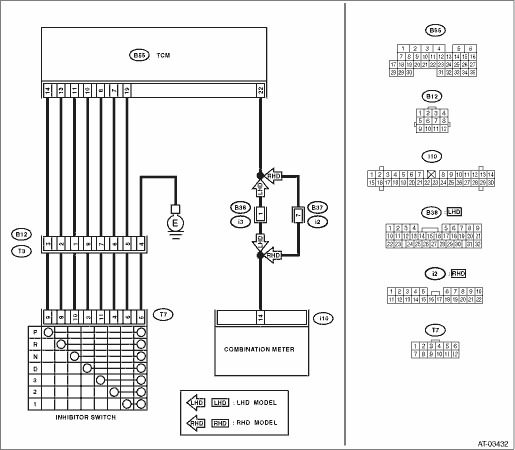
1.CHECK “P” RANGE SWITCH.
|
When the “P” range is selected, does the LED illuminate?
|
|
|
|
|
Does the combination meter “P” range indicator light illuminate?
|
|
|
3.CHECK “P” RANGE SWITCH.
|
When the “R” range is selected, does the “P” range LED light up?
|
|
|
4.CHECK “R” RANGE SWITCH.
|
When the “R” range is selected, does the LED illuminate?
|
|
|
|
|
Does the combination meter “R” range indicator light illuminate?
|
|
|
6.CHECK “R” RANGE SWITCH.
|
When the “N” range is selected, does the “R” range LED illuminate?
|
|
|
7.CHECK “N” RANGE SWITCH.
|
When the “N” range is selected, does the LED illuminate?
|
|
|
|
|
Does the combination meter “N” range indicator light illuminate?
|
|
|
9.CHECK “N” RANGE SWITCH.
|
When the “D” range is selected, does the “N” range LED illuminate?
|
|
|
10.CHECK “D” RANGE SWITCH.
|
When the “D” range is selected, does the LED illuminate?
|
|
|
11.CHECK INDICATOR LIGHT.
|
Does the combination meter “D” range indicator light illuminate?
|
|
|
12.CHECK “D” RANGE SWITCH.
|
When the “3” range is selected, does the “D” range LED illuminate?
|
|
|
13.CHECK “3” RANGE SWITCH.
|
When the “3” range is selected, does the LED illuminate?
|
|
|
14.CHECK INDICATOR LIGHT.
|
Does the combination meter “3” range indicator light illuminate?
|
|
|
15.CHECK “3” RANGE SWITCH.
|
When the “2” range is selected, does the “3” range LED illuminate?
|
|
|
16.CHECK “2” RANGE SWITCH.
|
When the “2” range is selected, does the LED illuminate?
|
|
|
17.CHECK INDICATOR LIGHT.
|
Does the combination meter “2” range indicator light illuminate?
|
|
|
18.CHECK “2” RANGE SWITCH.
|
When the “1” range is selected, does the “2” range LED illuminate?
|
|
|
19.CHECK “1” RANGE SWITCH.
|
When the “1” range is selected, does the LED illuminate?
|
|
|
20.CHECK INDICATOR LIGHT.
|
Does the combination meter “1” range indicator light illuminate?
|
|
|
21.CHECK “1” RANGE SWITCH.
|
When the “2” range is selected, does the “1” range LED illuminate?
|
|
Replace the TCM. 
|
22.CHECK HARNESS CONNECTOR BETWEEN INHIBITOR SWITCH AND CHASSIS GROUND.
1) Turn the ignition switch to OFF.
2) Disconnect the connector from inhibitor switch.
3) Measure the resistance of harness between inhibitor switch and chassis ground.
Connector & terminal
(T7) No. 5 — Chassis ground:
|
Is the resistance less than 1 Ω?
|
|
Repair the open circuit of harness between inhibitor switch and chassis ground, and poor contact of the connector.
|
23.CHECK HARNESS CONNECTOR BETWEEN TCM AND INHIBITOR SWITCH.
1) Turn the ignition switch to OFF.
2) Disconnect the connector from TCM and inhibitor switch.
3) Measure the resistance of the harness between TCM and inhibitor switch connector.
Connector & terminal
(B55) No. 14 — (T7) No. 9:
|
Is the resistance less than 1 Ω?
|
|
Repair the open circuit of harness between TCM and inhibitor switch connector, and poor contact of the connector.
|
24.CHECK INPUT SIGNAL FOR TCM.
1) Turn the ignition switch to OFF.
2) Connect the connector to TCM and inhibitor switch.
3) Turn the ignition switch to ON.
4) Shift the select lever to “P” range.
5) Measure the voltage between TCM and chassis ground.
Connector & terminal
(B55) No. 14 (+) — Chassis ground (−):
|
Is the voltage less than 1 V?
|
|
|
25.CHECK INPUT SIGNAL FOR TCM.
1) Shift the select lever to any range other than “P”.
2) Measure the voltage between TCM and chassis ground.
Connector & terminal
(B55) No. 14 (+) — Chassis ground (−):
|
Is the voltage 8 V or more?
|
|
Replace the TCM.
|
26.CHECK “P” RANGE INDICATOR LIGHT.
1) Turn the ignition switch to OFF.
2) Remove the combination meter.
3) Check the “P” range indicator light.
|
Is the “P” range indicator light bulb OK?
|
|
Replace the combination meter assembly.
|
27.CHECK HARNESS CONNECTOR BETWEEN TCM AND INHIBITOR SWITCH.
1) Turn the ignition switch to OFF.
2) Disconnect the connectors from TCM, inhibitor switch and combination meter.
3) Measure the resistance of harness between TCM connector and chassis ground.
Connector & terminal
(B55) No. 14 — Chassis ground:
|
Is the resistance less than 1 MΩ?
|
|
Repair ground short circuit in “P” range circuit.
|
28.CHECK HARNESS CONNECTOR BETWEEN TCM AND INHIBITOR SWITCH.
1) Turn the ignition switch to OFF.
2) Disconnect the connector from TCM and inhibitor switch.
3) Measure the resistance of the harness between TCM and inhibitor switch connector.
Connector & terminal
(B55) No. 13 — (T7) No. 8:
|
Is the resistance less than 1 Ω?
|
|
Repair the open circuit of harness between TCM and inhibitor switch connector, and poor contact of the connector.
|
29.CHECK INPUT SIGNAL FOR TCM.
1) Turn the ignition switch to OFF.
2) Connect the connector to TCM and inhibitor switch.
3) Turn the ignition switch to ON.
4) Move the select lever to “R” range.
5) Measure the voltage between TCM and chassis ground.
Connector & terminal
(B55) No. 13 (+) — Chassis ground (−):
|
Is the voltage less than 1 V?
|
|
|
30.CHECK INPUT SIGNAL FOR TCM.
1) Position the select lever to any other than “R” range.
2) Measure the voltage between TCM and chassis ground.
Connector & terminal
(B55) No. 13 (+) — Chassis ground (−):
|
Is the voltage 8 V or more?
|
|
Replace the TCM.
|
31.CHECK “R” RANGE INDICATOR LIGHT.
1) Turn the ignition switch to OFF.
2) Remove the combination meter.
3) Check the “R” range indicator light.
|
Is the “R” range indicator light OK?
|
|
Replace the combination meter assembly.
|
32.CHECK HARNESS CONNECTOR BETWEEN TCM AND INHIBITOR SWITCH.
1) Turn the ignition switch to OFF.
2) Disconnect the connectors from TCM, inhibitor switch and combination meter.
3) Measure the resistance of harness between TCM connector and chassis ground.
Connector & terminal
(B55) No. 13 — Chassis ground:
|
Is the resistance 1 MΩ or more?
|
|
Repair ground short circuit in “R” range circuit.
|
33.CHECK HARNESS CONNECTOR BETWEEN TCM AND INHIBITOR SWITCH.
1) Turn the ignition switch to OFF.
2) Disconnect the connector from TCM and inhibitor switch.
3) Measure the resistance of the harness between TCM and inhibitor switch connector.
Connector & terminal
(B55) No. 11 — (T7) No. 10:
|
Is the resistance less than 1 Ω?
|
|
Repair the open circuit of harness between TCM and inhibitor switch connector, and poor contact of the connector.
|
34.CHECK INPUT SIGNAL FOR TCM.
1) Turn the ignition switch to OFF.
2) Connect the connector to TCM and inhibitor switch.
3) Turn the ignition switch to ON.
4) Move the select lever to “N” range.
5) Measure the voltage between TCM and chassis ground.
Connector & terminal
(B55) No. 11 (+) — Chassis ground (−):
|
Is the voltage less than 1 V?
|
|
|
35.CHECK INPUT SIGNAL FOR TCM.
1) Move the select lever to any other than “N” range.
2) Measure the voltage between TCM and chassis ground.
Connector & terminal
(B55) No. 11 (+) — Chassis ground (−):
|
Is the voltage 8 V or more?
|
|
Replace the TCM.
|
36.CHECK “N” RANGE INDICATOR LIGHT.
1) Turn the ignition switch to OFF.
2) Remove the combination meter.
3) Check the “N” range indicator light.
|
Is the “N” range indicator light OK?
|
|
Replace the combination meter assembly.
|
37.CHECK HARNESS CONNECTOR BETWEEN TCM AND INHIBITOR SWITCH.
1) Turn the ignition switch to OFF.
2) Disconnect the connectors from TCM, inhibitor switch and combination meter.
3) Measure the resistance of harness between TCM connector and chassis ground.
Connector & terminal
(B55) No. 11 — Chassis ground:
|
Is the resistance 1 MΩ or more?
|
|
Repair the ground short circuit in “N” range circuit.
|
38.CHECK HARNESS CONNECTOR BETWEEN TCM AND INHIBITOR SWITCH.
1) Turn the ignition switch to OFF.
2) Disconnect the connector from TCM and inhibitor switch.
3) Measure the resistance of the harness between TCM and inhibitor switch connector.
Connector & terminal
(B55) No. 10 — (T7) No. 3:
|
Is the resistance less than 1 Ω?
|
|
Repair the open circuit of harness between TCM and inhibitor switch connector, and poor contact of the connector.
|
39.CHECK INPUT SIGNAL FOR TCM.
1) Turn the ignition switch to OFF.
2) Connect the connector to TCM and inhibitor switch.
3) Turn the ignition switch to ON.
4) Move the select lever to the “D” range.
5) Measure the voltage between TCM and chassis ground.
Connector & terminal
(B55) No. 10 (+) — Chassis ground (−):
|
Is the voltage less than 1 V?
|
|
|
40.CHECK INPUT SIGNAL FOR TCM.
1) Move the select lever to any other than “D” range.
2) Measure the voltage between TCM and chassis ground.
Connector & terminal
(B55) No. 10 (+) — Chassis ground (−):
|
Is the voltage 8 V or more?
|
|
Replace the TCM.
|
41.CHECK “D” RANGE INDICATOR LIGHT.
1) Turn the ignition switch to OFF.
2) Remove the combination meter.
3) Check the “D” range indicator light.
|
Is the “D” range indicator light OK?
|
|
Replace the combination meter assembly.
|
42.CHECK HARNESS CONNECTOR BETWEEN TCM AND INHIBITOR SWITCH.
1) Turn the ignition switch to OFF.
2) Disconnect the connectors from TCM, inhibitor switch and combination meter.
3) Measure the resistance of harness between TCM connector and chassis ground.
Connector & terminal
(B55) No. 10 — Chassis ground:
|
Is the resistance 1 MΩ or more?
|
|
Repair ground short circuit in “D” range circuit.
|
43.CHECK HARNESS CONNECTOR BETWEEN TCM AND INHIBITOR SWITCH.
1) Turn the ignition switch to OFF.
2) Disconnect the connector from TCM and inhibitor switch.
3) Measure the resistance of the harness between TCM and inhibitor switch connector.
Connector & terminal
(B55) No. 8 — (T7) No. 11:
|
Is the resistance less than 1 Ω?
|
|
Repair the open circuit of harness between TCM and inhibitor switch connector, and poor contact of the connector.
|
44.CHECK INPUT SIGNAL FOR TCM.
1) Turn the ignition switch to OFF.
2) Connect the connector to TCM and inhibitor switch.
3) Turn the ignition switch to ON.
4) Move the select lever to the “3” range.
5) Measure the voltage between TCM and chassis ground.
Connector & terminal
(B55) No. 8 (+) — Chassis ground (−):
|
Is the voltage less than 1 V?
|
|
|
45.CHECK INPUT SIGNAL FOR TCM.
1) Move the select lever out of the “3” range.
2) Measure the voltage between TCM and chassis ground.
Connector & terminal
(B55) No. 8 (+) — Chassis ground (−):
|
Is the voltage 8 V or more?
|
|
Replace the TCM.
|
46.CHECK “3” RANGE INDICATOR LIGHT.
1) Turn the ignition switch to OFF.
2) Remove the combination meter.
3) Check the “3” range indicator light.
|
Is the “3” range indicator light OK?
|
|
Replace the combination meter assembly.
|
47.CHECK HARNESS CONNECTOR BETWEEN TCM AND INHIBITOR SWITCH.
1) Turn the ignition switch to OFF.
2) Disconnect the connectors from TCM, inhibitor switch and combination meter.
3) Measure the resistance of harness between TCM connector and chassis ground.
Connector & terminal
(B55) No. 8 — Chassis ground:
|
Is the resistance 1 MΩ or more?
|
|
Repair ground short circuit in “3” range circuit.
|
48.CHECK HARNESS CONNECTOR BETWEEN TCM AND INHIBITOR SWITCH.
1) Turn the ignition switch to OFF.
2) Disconnect the connector from TCM and inhibitor switch.
3) Measure the resistance of the harness between TCM and inhibitor switch connector.
Connector & terminal
(B55) No. 7 — (T7) No. 4:
|
Is the resistance less than 1 Ω?
|
|
Repair the open circuit of harness between TCM and inhibitor switch connector, and poor contact of the connector.
|
49.CHECK INPUT SIGNAL FOR TCM.
1) Turn the ignition switch to OFF.
2) Connect the connector to TCM and inhibitor switch.
3) Turn the ignition switch to ON.
4) Move the select lever to the “2” range.
5) Measure the voltage between TCM and chassis ground.
Connector & terminal
(B55) No. 7 (+) — Chassis ground (−):
|
Is the voltage less than 1 V?
|
|
|
50.CHECK INPUT SIGNAL FOR TCM.
1) Move the select lever out of the “2” range.
2) Measure the voltage between TCM and chassis ground.
Connector & terminal
(B55) No. 7 (+) — Chassis ground (−):
|
Is the voltage 8 V or more?
|
|
Replace the TCM.
|
51.CHECK “2” RANGE INDICATOR LIGHT.
1) Turn the ignition switch to OFF.
2) Remove the combination meter.
3) Check the “2” range indicator light.
|
Is the “2” range indicator light OK?
|
|
Replace the combination meter assembly.
|
52.CHECK HARNESS CONNECTOR BETWEEN TCM AND INHIBITOR SWITCH.
1) Turn the ignition switch to OFF.
2) Disconnect the connectors from TCM, inhibitor switch and combination meter.
3) Measure the resistance of harness between TCM connector and chassis ground.
Connector & terminal
(B55) No. 7 — Chassis ground:
|
Is the resistance 1 MΩ or more?
|
|
Repair ground short circuit in “2” range circuit.
|
53.CHECK HARNESS CONNECTOR BETWEEN TCM AND INHIBITOR SWITCH.
1) Turn the ignition switch to OFF.
2) Disconnect the connector from TCM and inhibitor switch.
3) Measure the resistance of the harness between TCM and inhibitor switch connector.
Connector & terminal
(B55) No. 19 — (T7) No. 6:
|
Is the resistance less than 1 Ω?
|
|
Repair the open circuit of harness between TCM and inhibitor switch connector, and poor contact of the connector.
|
54.CHECK INPUT SIGNAL FOR TCM.
1) Turn the ignition switch to OFF.
2) Connect the connector to TCM and inhibitor switch.
3) Turn the ignition switch to ON.
4) Move the select lever to the “1” range.
5) Measure the voltage between TCM and chassis ground.
Connector & terminal
(B55) No. 19 (+) — Chassis ground (−):
|
Is the voltage less than 1 V at “1” range?
|
|
|
55.CHECK INPUT SIGNAL FOR TCM.
1) Move the select lever out of the “1” range.
2) Measure the voltage between TCM and chassis ground.
Connector & terminal
(B55) No. 19 (+) — Chassis ground (−):
|
Is the voltage 8 V or more?
|
|
Replace the TCM.
|
56.CHECK “1” RANGE INDICATOR LIGHT.
1) Turn the ignition switch to OFF.
2) Remove the combination meter.
3) Check the “1” range indicator light.
|
Is the “1” range indicator light OK?
|
|
Replace the combination meter assembly.
|
57.CHECK HARNESS CONNECTOR BETWEEN TCM AND INHIBITOR SWITCH.
1) Turn the ignition switch to OFF.
2) Disconnect the connectors from TCM, inhibitor switch and combination meter.
3) Measure the resistance of harness between TCM connector and chassis ground.
Connector & terminal
(B55) No. 19 — Chassis ground:
|
Is the resistance 1 MΩ or more?
|
|
Repair ground short circuit in “1” range circuit.
|
58.CHECK HARNESS CONNECTOR BETWEEN TCM AND COMBINATION METER.
1) Disconnect the connectors from TCM and combination meter.
2) Measure the resistance of harness between TCM and combination meter.
Connector & terminal
(B55) No. 22 — (i10) No. 14:
|
Is the resistance 1 Ω or more?
|
|
Repair or replace the open circuit of harness between TCM and combination meter.
|
59.CHECK HARNESS CONNECTOR BETWEEN TCM AND COMBINATION METER.
Measure the resistance of the harness between TCM and chassis ground.
Connector & terminal
(B55) No. 22 — Chassis ground:
|
Is the resistance 1 MΩ or more?
|
|
Repair the short circuit of harness between TCM and combination meter.
|
|
|
Is there poor contact in the inhibitor switch circuit?
|
|
|
61.CHECK INHIBITOR SWITCH.
|
Is the inhibitor switch in the normal position?
|
Replace the TCM.
|
Adjust inhibitor switch and select cable.
|